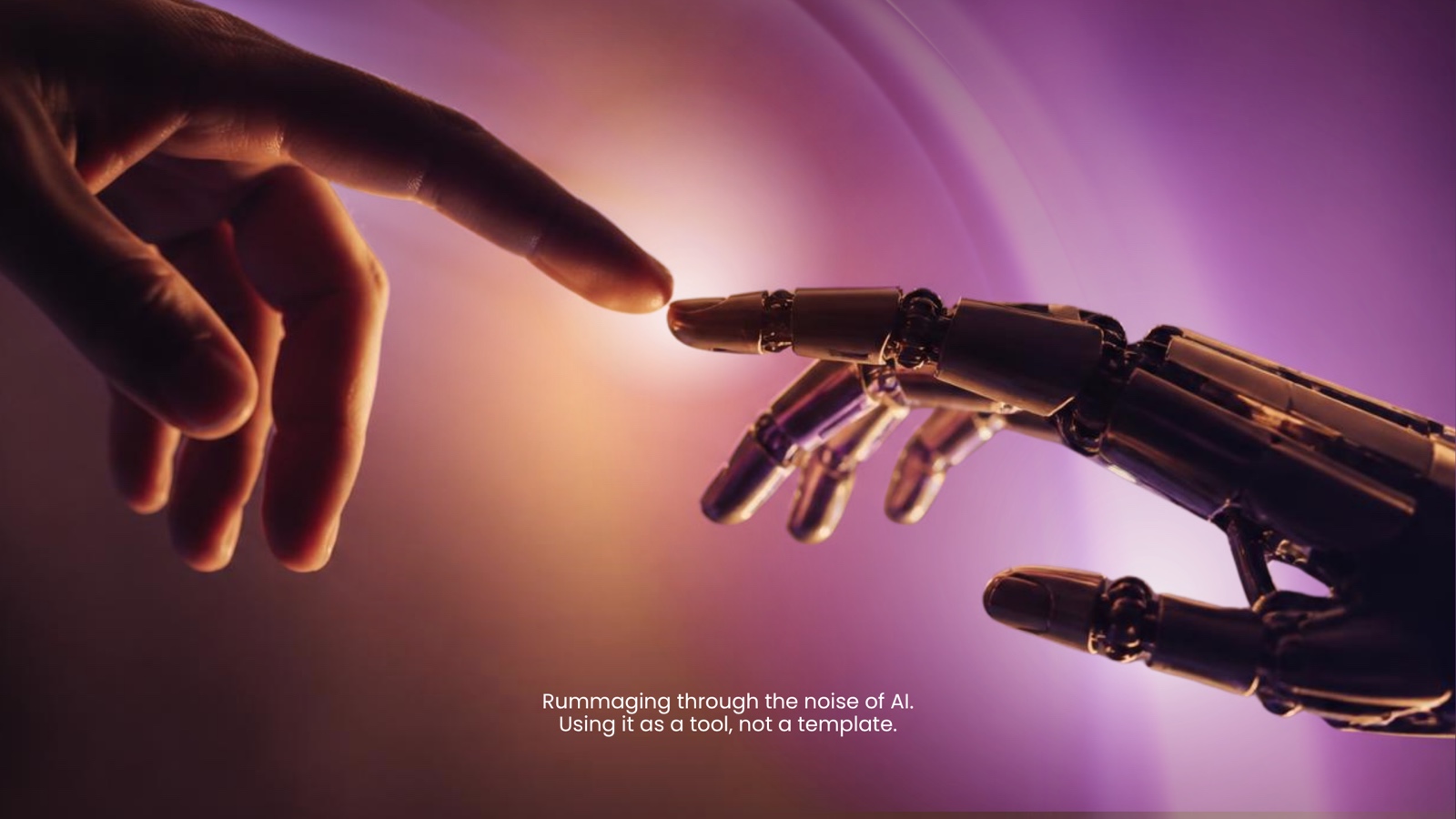
Every business is undergoing a shift, and businesses in Mauritius are no exception. We won't lie: businesses that don't adapt may flop, unless they have the capital to invest in other resources that make up for that lack of adaptation. AI is expanding, and every business is feeling it. But most articles about this topic won't actually tell you anything useful. They'll say "it's nuanced" and leave you exactly where you started.
We're not going to do that. Here's our actual position.
Will AI Take My Job in 2026?
Short answer: it depends entirely on what kind of work you do, and most people asking this question haven't honestly figured that out yet.
Here's the split we think actually matters: repetitive-output jobs are genuinely at risk. Judgment-and-taste jobs are not, but only if you keep sharpening the judgment and taste part, instead of coasting.
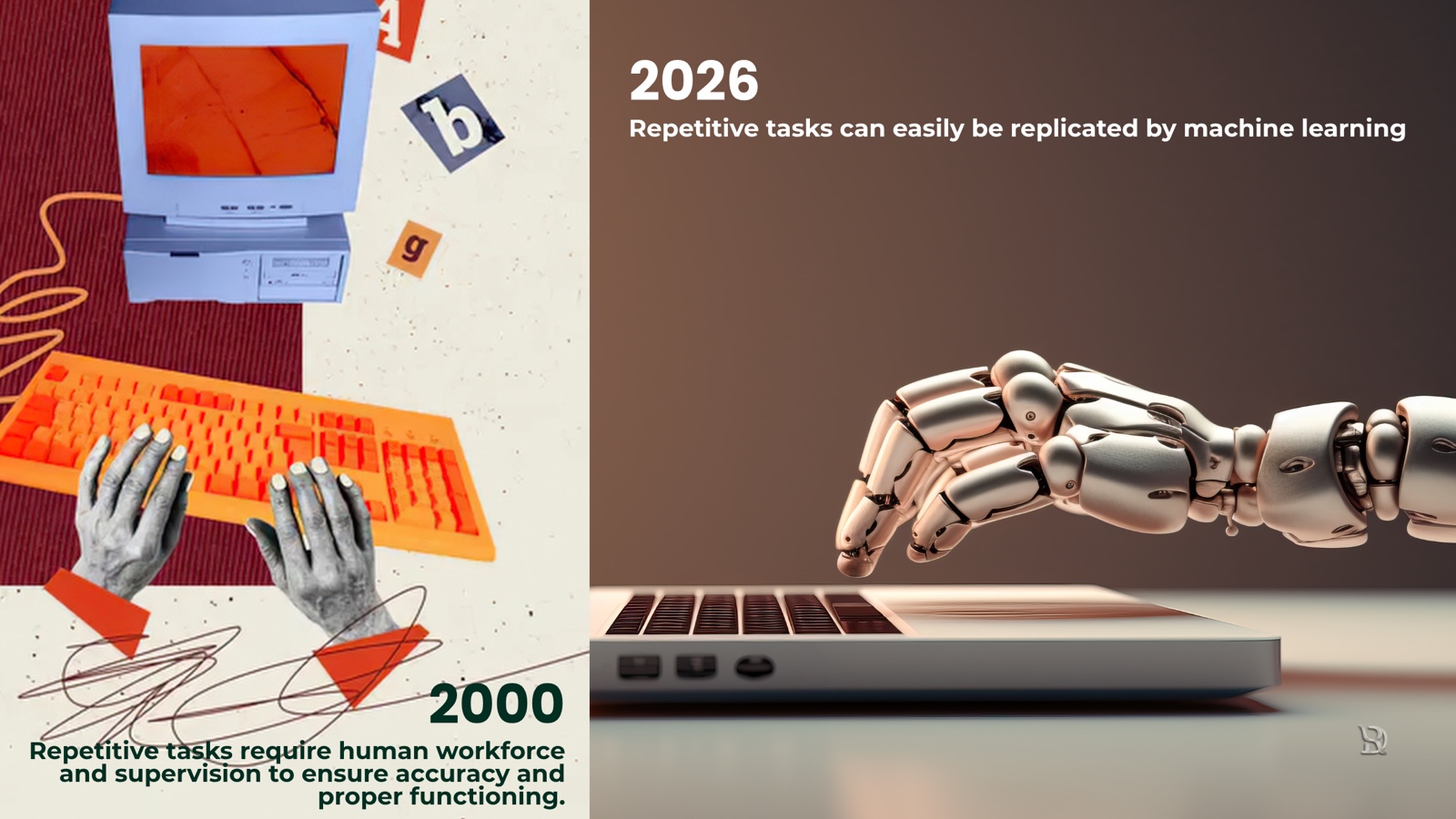
If your job is mostly "take input, produce a fairly standard output, repeat" — basic copywriting, basic data entry, template design, routine scheduling, boilerplate contracts — AI doesn't need to be as good as you. It just needs to be good enough, fast, and free. That's not a comforting truth, but it's the honest one, and pretending otherwise doesn't help anyone plan.
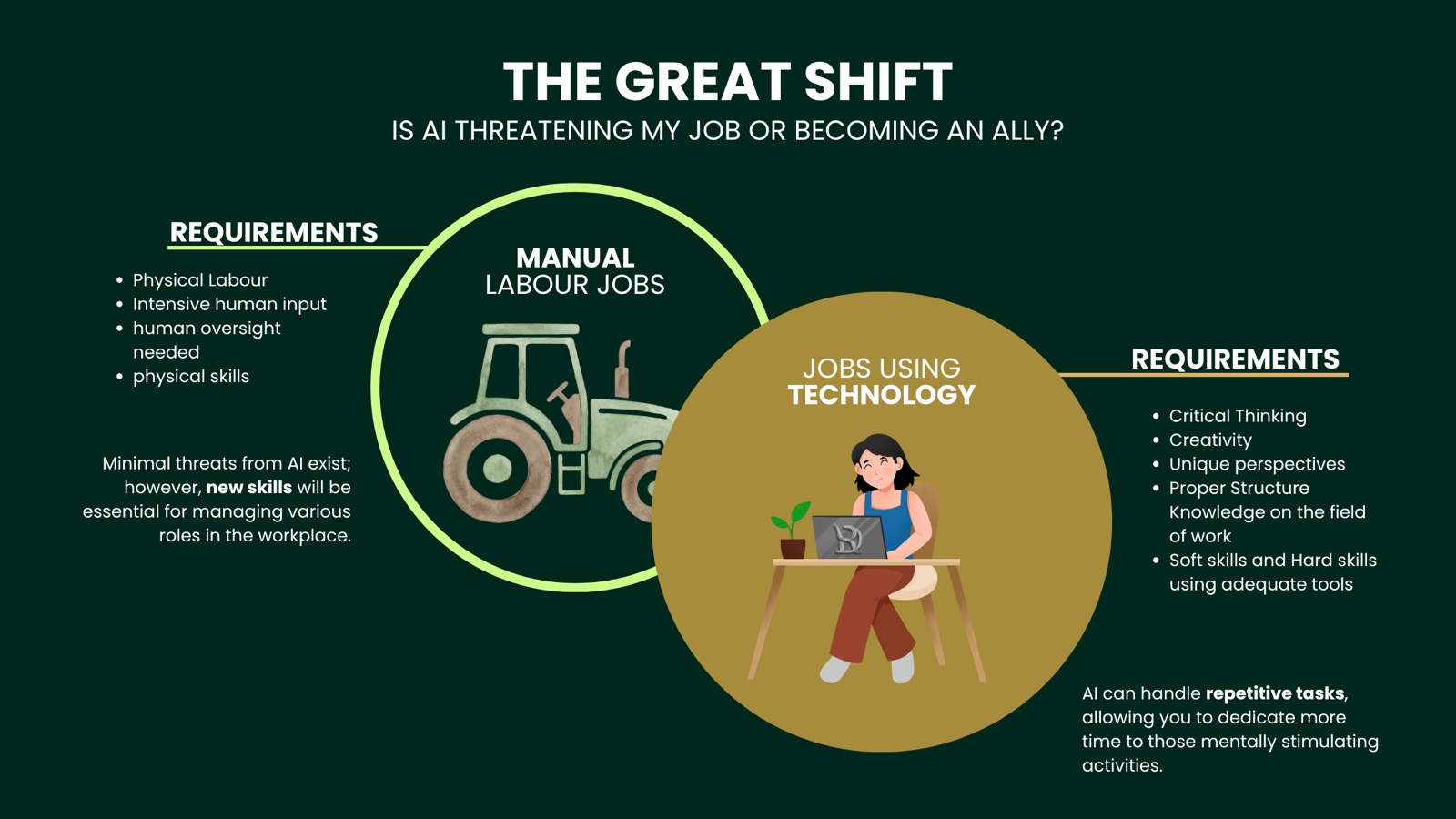
If your job depends on judgment calls, taste, negotiation, reading a room, or knowing which of ten "correct" options is actually the right one for this specific client, that's harder to automate, because AI has no taste of its own. It has patterns. Taste is choosing which pattern to break.
So the real question isn't "is AI coming for my job." It's: how much of what I do every day is repetition, and how much is judgment? Be honest with yourself about the ratio. That answer tells you more than any think-piece will.
For Marketers and Designers Specifically
This split shows up clearly here. Flyers done in two minutes, sure. But have you seen flyers made with zero human input, no scope, no research behind them? They look the same everywhere you go. That's the repetitive-output layer, and it's genuinely replaceable, fast. What isn't replaceable is knowing which product to lead with, which aesthetic actually fits the brand, and which UX a human brain will connect with instead of just tolerate. That's judgment. AI can generate ten versions of a flyer in a minute. It cannot tell you which one is right for your audience. You still have to.
So, Should You Use It?
Yes. Specifically for the repetitive-output part of your job, and only there.
Use it to draft the first pass, not the final one. Use it to handle the boilerplate so you spend your time on the judgment calls that actually justify your rate or your role. The moment you start letting it make the judgment calls too, the moment you stop checking its work with your own taste, is the moment you've stopped using the tool and started being replaced by it, slowly, without noticing.
That's the real risk, and it's not "AI takes your job." It's "you hand over the part of your job that was never AI's to take, because it was easier than doing it yourself."
The Environmental Impact of AI
There's a lot written online about AI's environmental footprint. Two articles stood out to us:
Both make a point worth sitting with: AI's water and carbon usage doesn't exist in a vacuum. Gaming and live streaming carry a similar scale of impact, and one of the articles even compares AI's emissions to New York City's entire 2025 carbon footprint.
This connects directly back to the repetition-versus-judgment split above: if a task is purely repetitive, ask whether it needed a heavy generative model at all, or whether a lighter tool — software that already learnt the pattern and doesn't need to generate something new at every turn — or a human, would have done it with less waste. Using AI for judgment-replacement is the expensive mistake twice over, costly to your skills, and costly to the planet for output nobody needed automated in the first place.
Our Conclusion
AI will help your business if you use it to eat the repetition and leave your judgment alone. It will hurt your business and eventually your relevance the moment you let it do both.